

Ball Turning Attachments: How to Get Perfect Radii on a Manual Lathe
- , by Mani Bhushan
- 22 min reading time
Did You Know?
You do not need a CNC machine, a CAM program, or a $50,000 toolroom to turn a perfect steel sphere. A simple pivoting attachment bolted to your compound slide can carve a mirror-smooth ball, knob, or radius on a basic manual lathe in a couple of minutes, no math, no G-code, just geometry doing the work for you.
There is a small, quiet thrill that happens the first time you watch a plain steel rod turn into a shiny, perfectly round ball right on your own lathe. No template, no freehand filing, no eyeballing it and hoping for the best. Just a smooth arc of chips falling away as the tool sweeps through a perfect circle. That is what a ball-turning attachment does, and once you have used one, going back to shaping curves by hand feels a bit like switching back to a flip phone.
Whether you are building handwheels for a homemade tailstock, decorative ball ends for furniture hardware, or precision spherical components for a model steam engine, the right attachment turns a fiddly freehand job into something almost boringly repeatable. And that is exactly the point.
In this guide, we will walk through what a ball turning attachment actually does, the different styles you will run into (direct-fit, oval base, single bit, double bit), how to set one up without pulling your hair out, common mistakes that ruin a good sphere, and how to pick the right ball turning attachment for your lathe.
Table of Contents
- What Is a Ball Turning Attachment?
- Why Bother? Attachment vs Freehand
- Direct-Fit Attachments for Mini Lathes
- Oval Base Attachments with Graduation Scales
- Single Bit vs Double Bit Attachments
- Ball Turning Attachment Comparison
- Best Applications
- How to Choose the Right One
- Common Ball Turning Problems
- Pro Tips for a Mirror Finish
- Attachment Maintenance
What Is a Ball Turning Attachment?
A pivot, a cutting tool, and pure circular geometry.
A ball turning attachment mounts onto (or replaces) your lathe's compound slide and holds a cutting tool that pivots around an adjustable center point. As the workpiece spins in the chuck, the tool sweeps through a controlled arc, and because that arc is a true circle, the surface it leaves behind is a true sphere or radius. Move the pivot point closer or farther from the tool tip, and you change the radius you are cutting.
It sounds almost too simple to work this well, but that is the whole trick: instead of trying to coordinate two axes by feel to trace a curve, you let one mechanical pivot do the geometry for you. The result is a clean, repeatable sphere or radius every single time, whether you are making one part or fifty identical ones.
Why Bother? Attachment vs Freehand
Because "close enough" is not the same as round.
Freehand ball turning, working the compound and cross-slide together by feel while filing and sanding to blend the curve, is a real skill, but it is slow, inconsistent, and painful to repeat across multiple parts. A ball turning attachment trades that hand-eye juggling act for a fixed mechanical arc, so every part comes out the same shape without relying on muscle memory.
True Spherical Geometry
The pivot mechanism guarantees a mathematically correct arc, not an approximation.
Repeatable Across Batches
Set the radius once, and every part in the run comes out identical.
Way Less Hand Finishing
A smooth, true arc straight off the tool means minimal filing and sanding afterward.
Beginner-Friendly Setup
You do not need decades of freehand experience to get a clean, professional result.
Direct-Fit Attachments for Mini Lathes
Bolts straight onto a 7x14 or 7x16 mini lathe, no adapters needed.
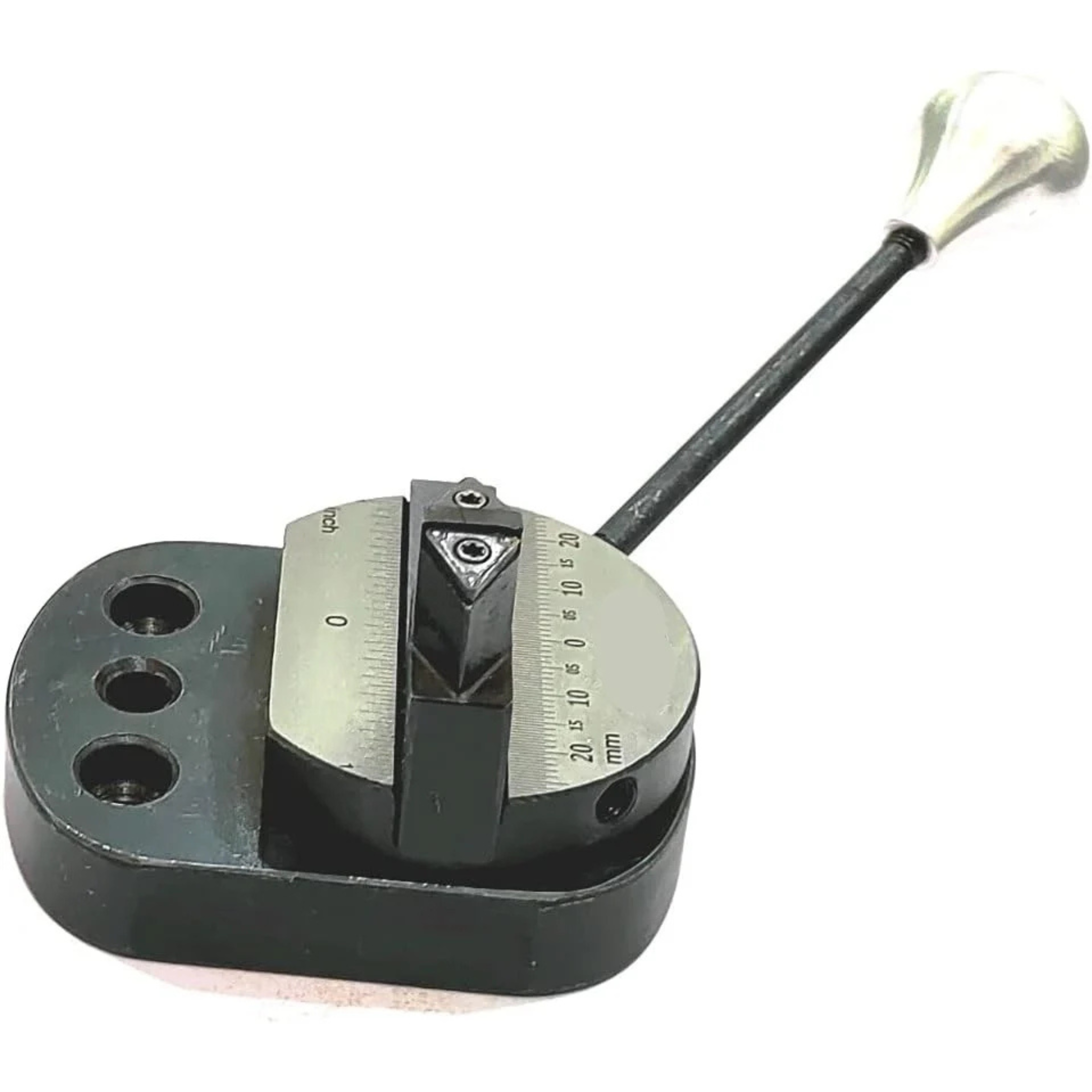
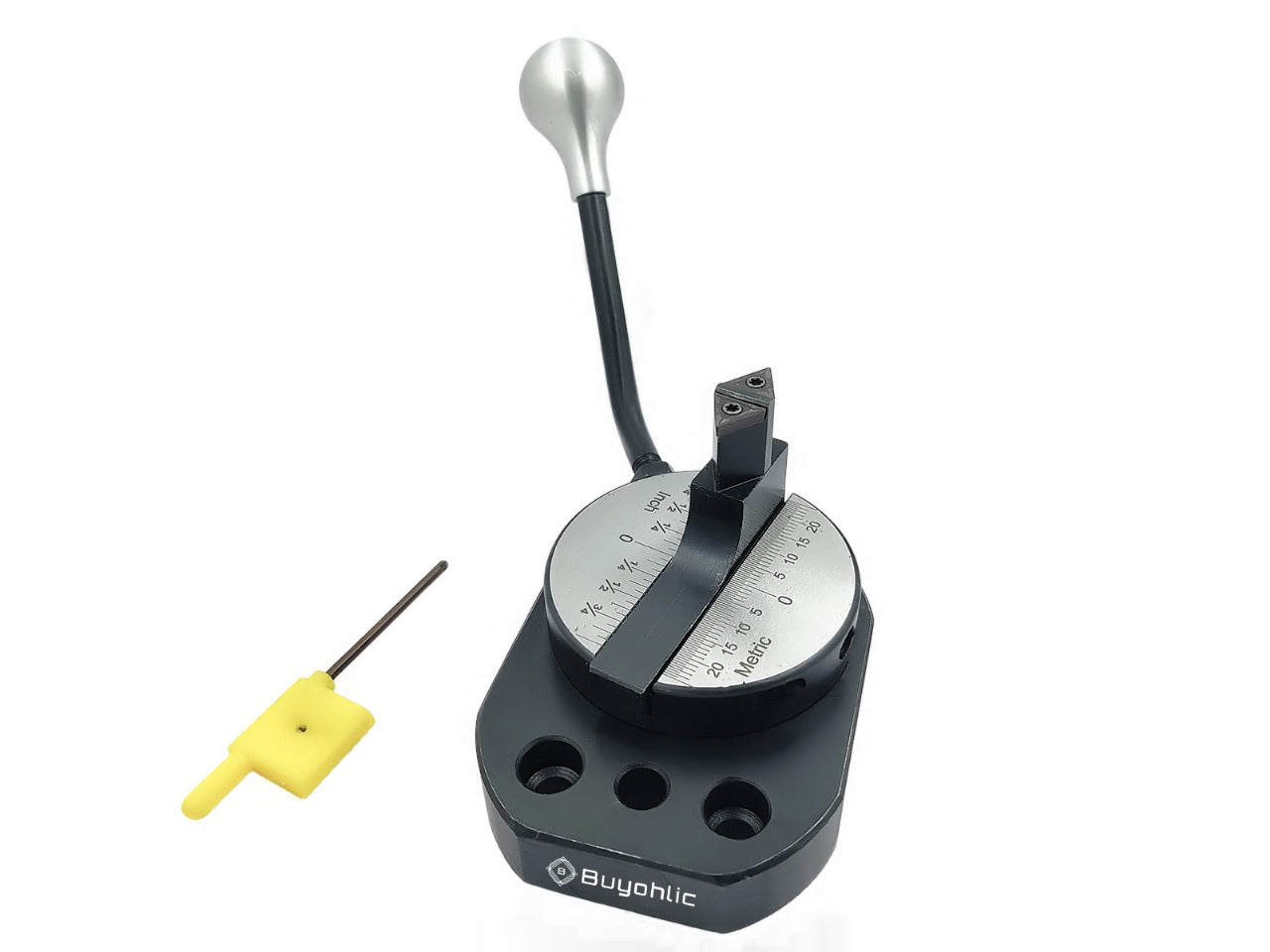
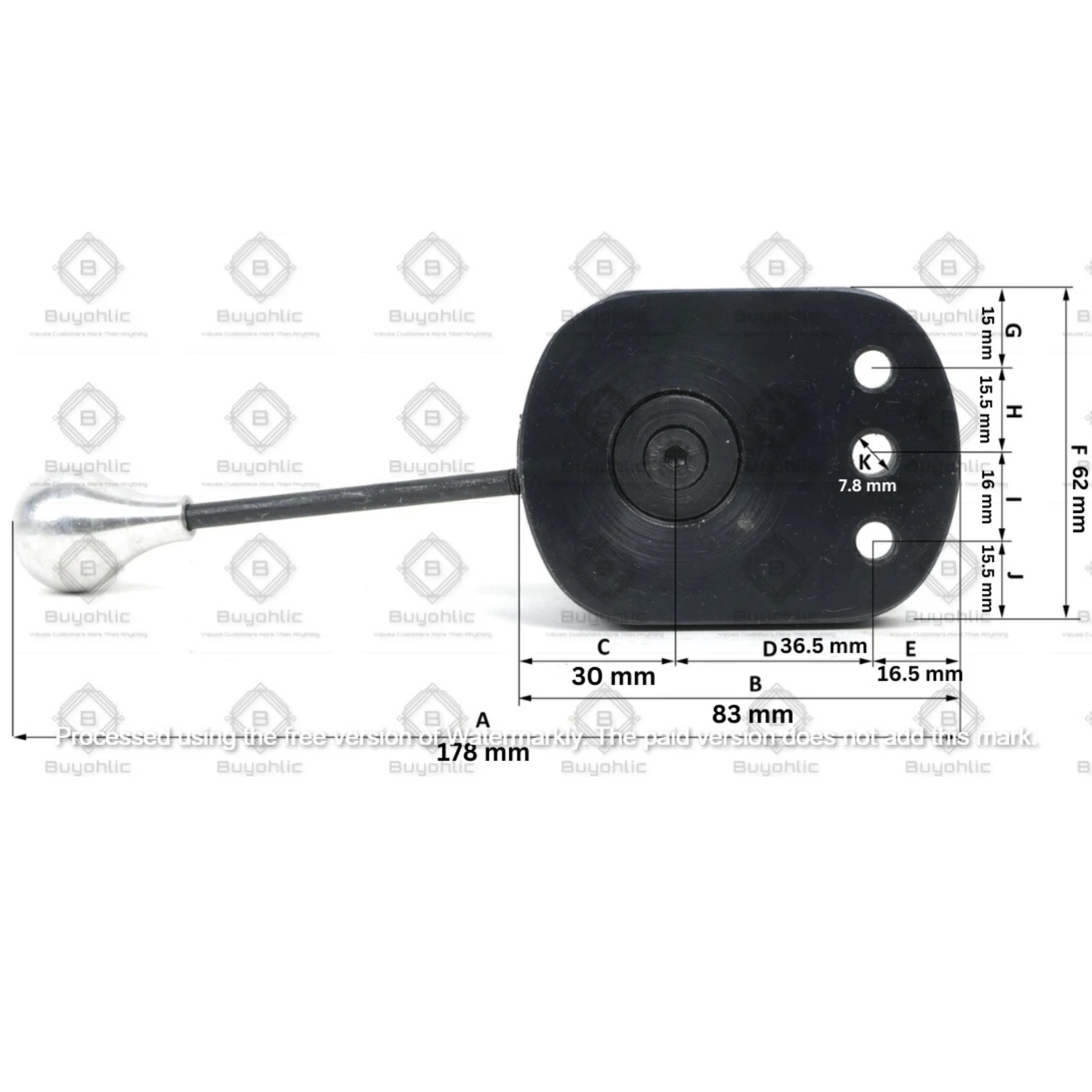
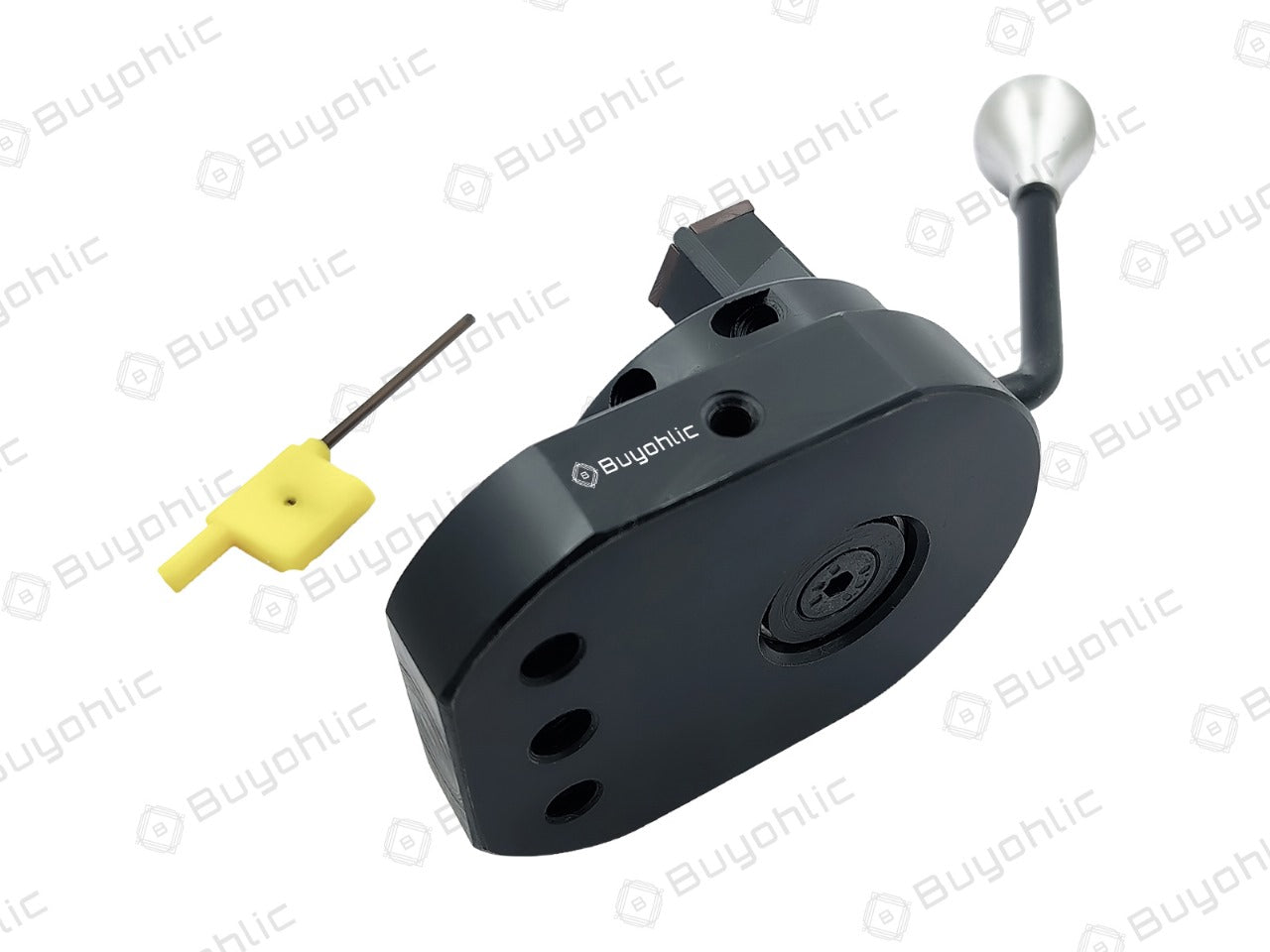
A direct-fit ball turning attachment is built to bolt straight onto the compound slide mounting holes of a 7x14 or 7x16 mini lathe, swapping in for the compound rest itself rather than clamping on top of it. Most direct-fit designs use dual indexable carbide inserts (commonly TCMT110204-style), so each insert gives you multiple usable cutting edges before you need to replace anything.
This is the style most home-shop machinists reach for first, since mini lathes are everywhere in hobby workshops, and a direct-fit attachment sidesteps the fiddly job of building a custom mounting bracket. A close cousin of this design uses side mounting holes instead of the compound bolt pattern, which some 7x14 owners find easier to align during first-time setup.
Oval Base Attachments with Graduation Scales
For standard and larger engine lathes, with numbers you can actually dial in.
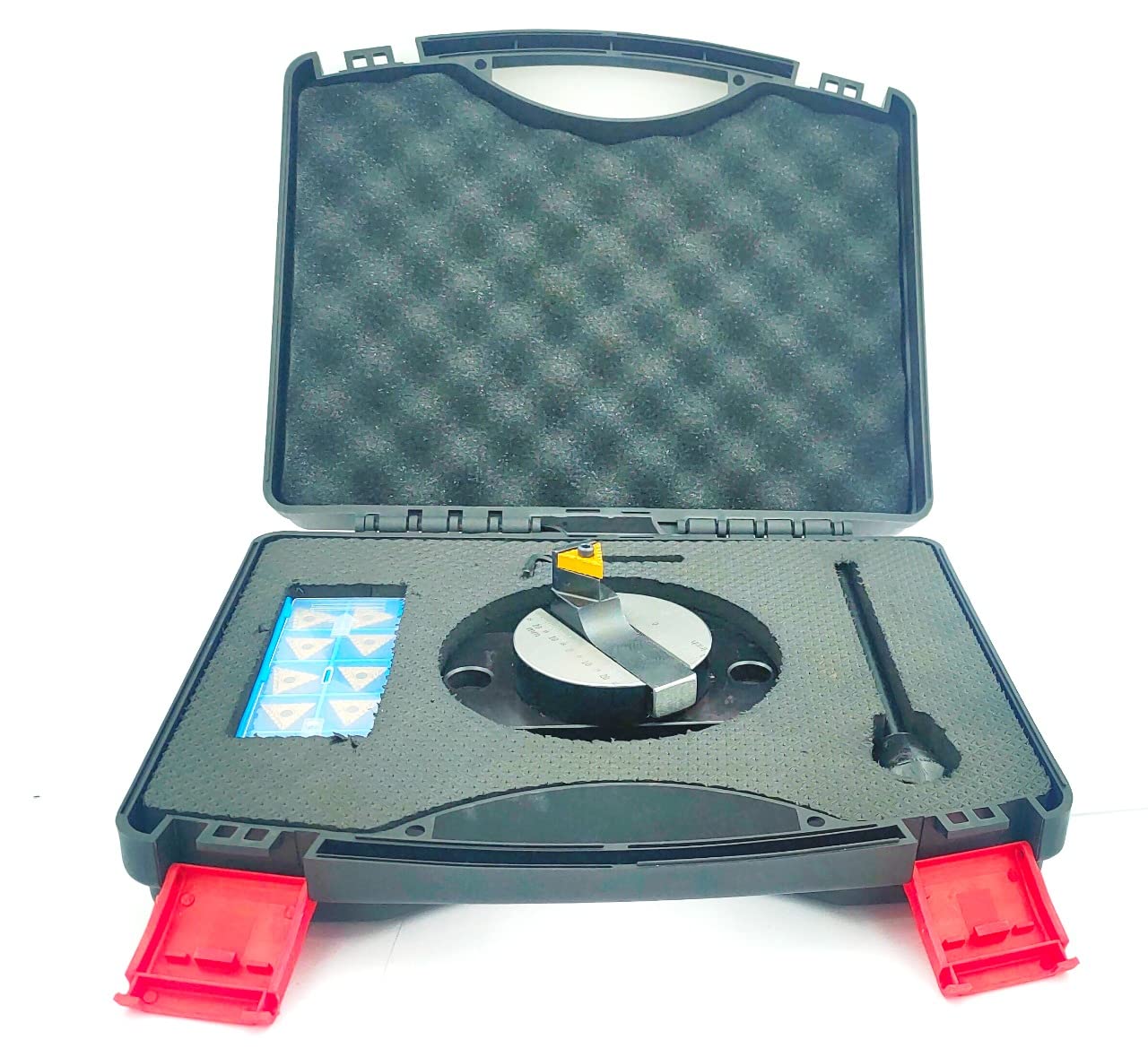
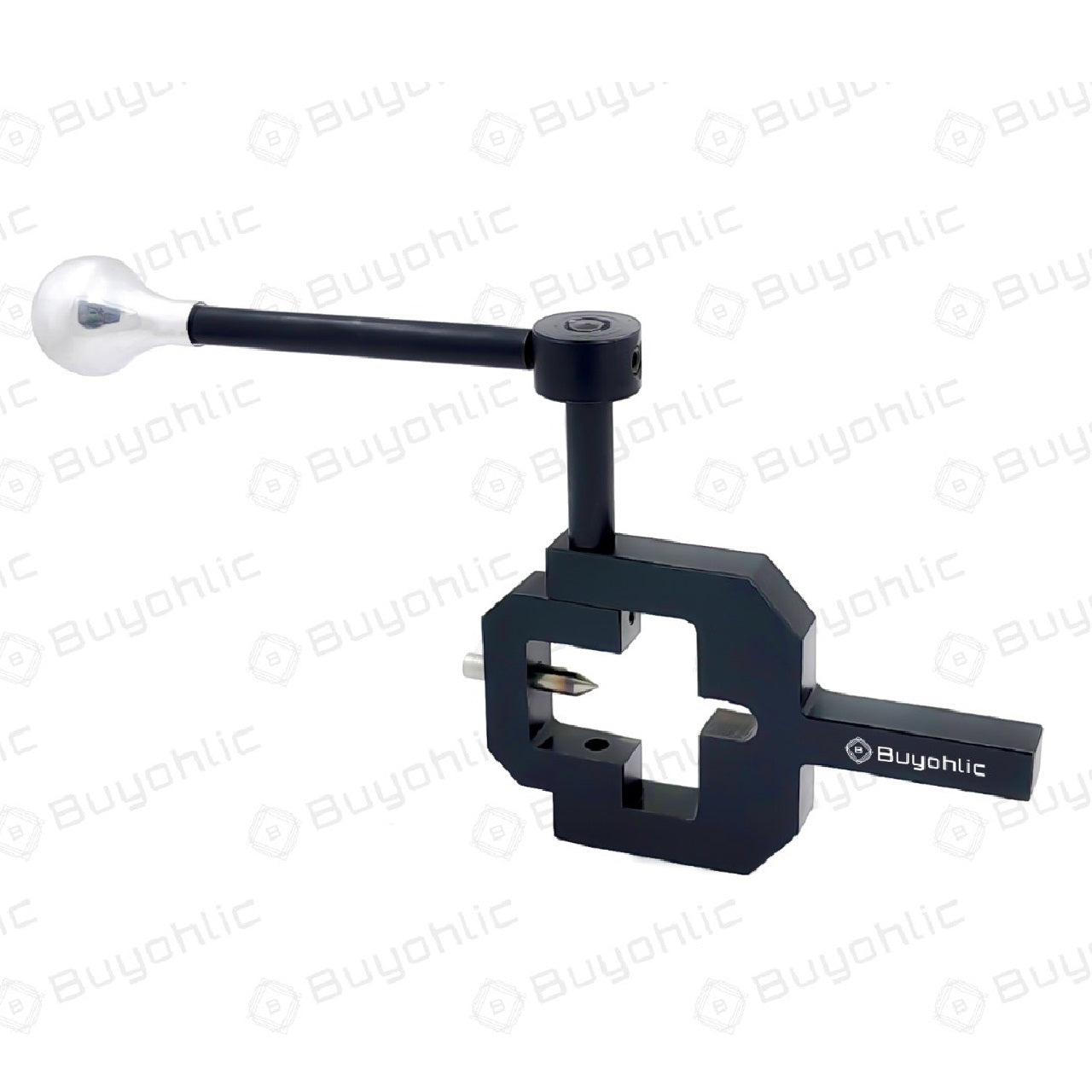
If you are running a full-size engine lathe rather than a mini lathe, an oval ball turning attachment is usually the better fit. These clamp onto the compound slide (or cross-slide, depending on your setup) and typically include a graduation scale, so instead of guessing where to set the pivot, you can dial in a specific radius and repeat it exactly on the next part. Many oval base attachments ship with a box of spare cutting bits, which is handy since you will burn through a few while learning the ropes.
Single Bit vs Double Bit Attachments
One cutting-edge or two, and why it matters more than you would think.
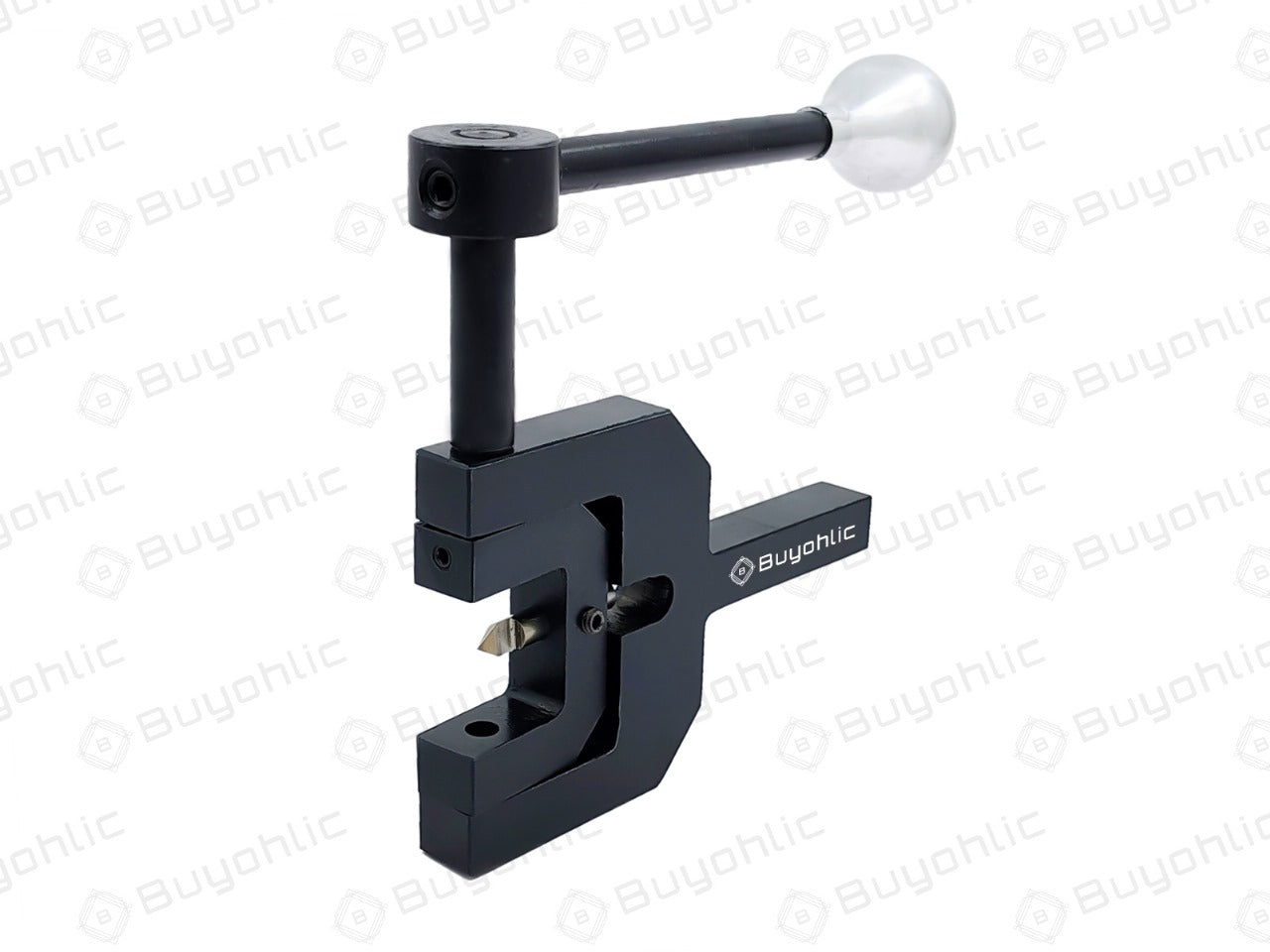
A single-bit attachment holds one cutting tool, usually an HSS bit ground to a point, and works the full arc in one pass. A double-bit (or "dual insert") attachment holds two cutters roughly opposite each other, so the cutting load balances out as the tool sweeps through the arc, which tends to produce a smoother finish with less chatter, especially on harder materials. Double-bit setups are also handy simply because when one insert edge dulls, you can rotate or swap it without disturbing your radius setting.
Ball Turning Attachment Comparison
Every style trades off convenience, precision, and machine compatibility a little differently. Here is the quick rundown.
| Feature | Direct-Fit (Mini Lathe) | Oval Base | HSS Radius Tool |
|---|---|---|---|
| Best Lathe Type | 7x14 / 7x16 mini lathes | Standard engine lathes | Standard and larger lathes |
| Setup Effort | Lowest, bolts right on | Moderate | Moderate |
| Radius Adjustment | Adjustable head | Graduation scale | Manual set, HSS bit ground to shape |
| Cutting Edges | Dual carbide inserts | Swappable HSS bits | Single HSS bit, 3/8" shank |
| Best Use | Hobbyist mini lathe projects | Repeatable production radii | General-purpose radius work |
Quick Recommendation: Got a 7x14 or 7x16 mini lathe? Grab a direct-fit attachment and skip the fabrication headache. Running a full-size engine lathe and want repeatable numbers? An oval base attachment with a graduation scale is worth the extra setup time.
Best Applications for Ball Turning Attachments
From workshop handwheels to model-engineering showpieces.
Ball turning attachments earn their keep anywhere a project calls for a genuinely round, repeatable curve instead of a rough approximation. That covers a surprising amount of ground, from purely functional parts to pieces that are meant to look good sitting on a shelf.
Functional Parts
- Machine handwheels and control knobs
- Lever ball ends
- Bearing surfaces and pivot balls
- Custom fixture and jig components
- Tool handle ends
Model Engineering & Decorative Work
- Miniature steam engine components
- Model machinery detailing
- Furniture hardware and finials
- Ornamental metalwork
- Custom fabrication showpieces
How to Choose the Right One
Start with your lathe, then think about repeatability.
The single biggest factor is simple: what lathe do you own? A 7x14/7x16 mini lathe practically demands a direct-fit attachment, since it saves you from designing a mounting bracket from scratch. Beyond that, ask yourself whether you need to dial in exact, repeatable radii (go graduated) or whether a general-purpose HSS radius tool will cover most of your projects.
Quick Selection Guide
| Own a 7x14 / 7x16 mini lathe? | Choose a Direct-Fit Attachment |
| Need exact, repeatable radii? | Choose an Oval Base with Scale |
| Cutting harder materials? | Choose a Double Bit / Carbide Insert Design |
| Occasional general-purpose radius work? | Choose an HSS Radius Tool |
| New to ball turning? | Pick One with Spare Cutting Bits Included |
Common Ball Turning Problems and Their Solutions
Most "lumpy sphere" problems come down to one of these five things.
| Problem | Cause | Solution |
|---|---|---|
| Flat spot or dimple at the ball's center | Tooltip is not set exactly at the center height | Re-check and align the tool height precisely to the spindle center |
| Chatter or rough finish | Excessive stick-out or feeding too aggressively | Reduce overhang, slow the feed, take lighter finishing passes |
| The ball is slightly oval, not round | Loose or worn pivot mechanism | Tighten pivot hardware or service the attachment's bearing |
| Radius does not match the graduation scale | Attachment was not zeroed correctly at setup | Re-zero against a known reference before cutting |
| Tool digs in mid-sweep | Too heavy a cut for a single pass | Take multiple progressively lighter passes to the final size |
Pro Tips for a Mirror Finish
Small habits that separate a good sphere from a great one.
- Rough out most of the material first, then switch to light finishing passes for the final shape.
- Keep spindle speed on the higher side and feed rate slow for a smoother sweep.
- Flood the cut with cutting oil, especially on the finishing passes.
- Sweep in one continuous, steady motion rather than stopping partway through the arc.
- Deburr the workpiece end before starting, so the tool does not catch on a sharp edge.
- Keep a spare set of cutting bits on hand; you will dull more than you expect while learning.
- Double-check tool height every time you remount the attachment, not just the first time.
Attachment Maintenance
The pivot is the heart of the tool, so treat it well.
The pivot mechanism is what makes the whole attachment work, so keeping it clean and lightly lubricated matters more than almost anything else. Wipe down the base and pivot after every session to clear chips and swarf, add a drop of light machine oil to the pivot point periodically, and store the attachment somewhere it will not get knocked around with other tools. If the pivot ever develops play or grittiness, service it before your next project; a loose pivot is the number one cause of lopsided "spheres."
Pro Tip: Keep a small log (even a sticky note on the toolbox works) of radius settings you have dialed in for common jobs. Future you will thank present you the next time you need to make "that same ball handle again."
Explore Our Ball Turning Range
A quick look at ball and radius turning attachments from the Buyohlic catalog, covering mini lathes, standard lathes, and both single and dual-bit designs.
Conclusion
A ball turning attachment is one of those tools that feels like a small upgrade until you actually use one, and then it quietly becomes indispensable. Whether you grab a direct-fit unit for your mini lathe or a graduated oval base for repeatable production work, the payoff is the same: clean, true, repeatable curves without the guesswork of freehand shaping.
Match the attachment to your lathe and your project, keep the pivot clean and lubricated, and take your time on the finishing passes. Do that, and every ball, knob, and radius that comes off your lathe will look like it belongs in a catalog, not a garage.
Related Collections
Ready to Turn Your First Perfect Sphere?
Buyohlic supplies professional-quality ball turning attachments, lathe accessories, and workshop equipment trusted by machinists and hobbyists across the USA. Our products are selected for accuracy, durability, and reliable performance in both manual and CNC machining environments.
Shop Ball Turning Attachments NowAbout Buyohlic
Buyohlic is your trusted source for premium industrial tools, cutting tools, and precision measuring instruments. With decades of experience serving machinists, engineers, and manufacturers, we're committed to supplying tools that professionals depend on for accuracy, durability, and reliability.
Every tool in our catalog is selected for quality and backed by our commitment to customer satisfaction. Fast shipping, expert support, and competitive pricing make Buyohlic your one-stop shop for precision turning, cutting, and measurement tools.
Frequently Asked Questions
Do I need a special lathe to use a ball turning attachment?
Can I make different ball sizes with one attachment, or do I need a new one each time?
Why does my ball come out with a flat spot in the middle?
HSS or carbide inserts, which cuts better for ball turning?
Do I need to take multiple passes, or can I cut the ball in one go?
How do I know if my attachment needs servicing?


Great Value
Most popular brands with widest range of selection at best prices.

Nationwide Delivery
Over 20,000 pincodes serviceable across India.

Secure Payment
Partnered with India's most popular and secure payment solutions.

Buyer Protection
Committed to buyer interests to provide a smooth shopping experience.