


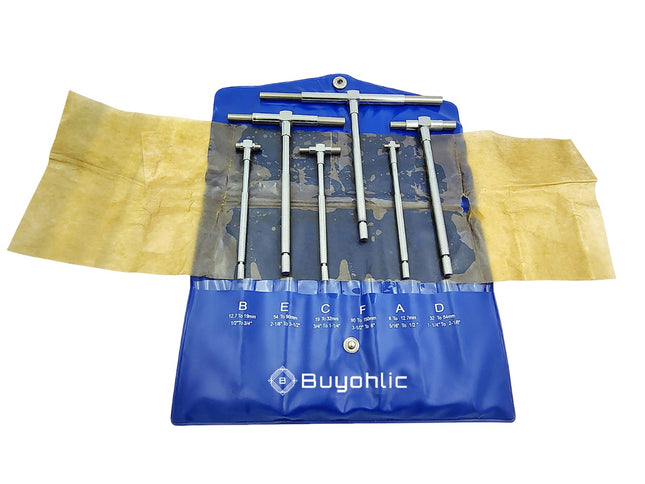


Miscellaneous gauges cover the wide range of specialized measuring and checking tools that do not fit neatly into a single category but remain essential for verifying dimensions, angles, thread fit, and surface conditions across machining and fabrication work. Buyohlic stocks a variety of gauges for machinists, inspectors, and fabricators across the USA who need reliable, accurate checking tools beyond the standard caliper or micrometer.
Why a Shop Needs More Than One Type of Gauge
No single measuring tool covers every checking task in a shop. A caliper measures length and diameter well, but it cannot verify a thread's pitch diameter, check a radius, or confirm a hole's exact size the way a dedicated thread gauge, radius gauge, or plug gauge can. Miscellaneous gauges fill these specific gaps, each purpose-built for one type of measurement or go/no-go check.
Having the right specialized gauge on hand often saves significant time compared to attempting to verify the same feature indirectly with general-purpose measuring tools, and it typically delivers a more reliable, repeatable result as well.
Common Types of Gauges
- Thread pitch gauges for identifying and verifying thread pitch
- Radius gauges for checking fillet and corner radii
- Plug and ring gauges for go/no-go hole and shaft size verification
- Wire gauges for measuring wire and sheet metal thickness
- Center and depth gauges for specific layout and setup checks
Choosing the Right Gauges for Your Shop
Start with the gauges that match your most frequent inspection needs; a shop doing significant threading work benefits most from a quality thread pitch gauge set, while a shop working with cast or fabricated parts often needs radius gauges on hand regularly. Go/no-go plug and ring gauges are particularly valuable in production environments where fast, repeatable pass or fail verification matters more than an exact numerical reading.
Inspection Habits Worth Building
Regularly checking critical dimensions with the correct gauge, rather than relying solely on machine settings or assumed consistency, catches drift and tool wear before it produces a batch of out-of-tolerance parts. Building gauge checks into a routine at key stages of a job, not just at final inspection, is one of the most effective habits a shop can adopt for consistent quality.
Buyohlic stocks a wide selection of these specialized gauges alongside its broader measuring tool catalog, making it straightforward to build a complete inspection toolkit from a single supplier.


