


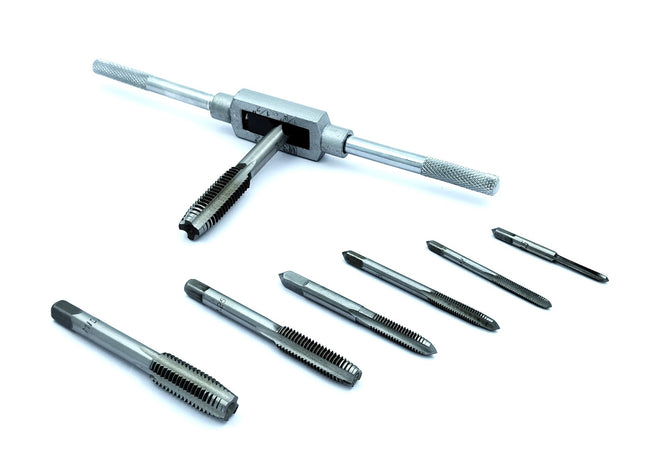
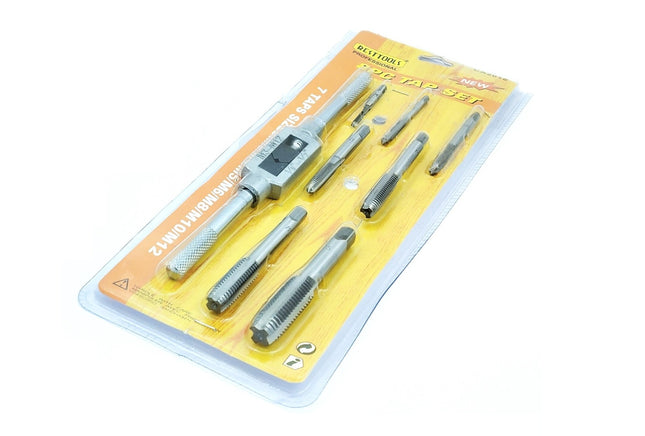


Tap and Die Sets - Complete Threading Solutions for Internal and External Threads
Threads are among the most widely used fastening systems in engineering, manufacturing, maintenance, and repair work. Whether assembling machinery, repairing damaged fasteners, creating custom threaded components, or restoring worn threads, the correct tap and die set is an essential part of every workshop.
Buyohlic's Tap and Die Sets provide comprehensive threading solutions for machinists, maintenance technicians, fabrication shops, automotive professionals, and DIY users across the USA. Designed to create and repair both internal and external threads, these sets include the most commonly used thread standards in organized storage cases for convenient workshop use.
What is a Tap and Die Set?
A tap and die set contains two primary threading tools:
-
Taps for cutting internal threads inside drilled holes
-
Dies for cutting external threads on rods, shafts, bolts, and studs
Together, they allow users to manufacture new threads, restore damaged threads, and create custom threaded components for a wide range of applications.
Internal Threading with Taps
Taps are used to create threaded holes that accept bolts, screws, and threaded fasteners.
Common applications include:
-
Manufacturing threaded components
-
Equipment repair
-
Maintenance work
-
Prototype fabrication
-
Automotive repair
-
Machine shop operations
Using the correct tap ensures accurate thread geometry, proper fastener engagement, and reliable long-term performance.
External Threading with Dies
Dies are designed to cut threads on the outside diameter of rods, shafts, and fasteners.
Typical uses include:
-
Creating threaded rods
-
Manufacturing custom bolts
-
Restoring damaged bolt threads
-
Producing replacement fasteners
-
Threading shaft ends
Proper die alignment helps produce straight, clean threads with excellent fit and finish.
Thread Standards Available
UNC (Unified National Coarse)
UNC threads are the standard choice for most general-purpose fastening applications in the United States.
Benefits include:
-
Faster assembly
-
Greater resistance to stripping
-
Better performance in soft materials
-
Easier thread engagement
UNF (Unified National Fine)
UNF threads feature more threads per inch and are commonly used when greater strength, precision adjustment, and vibration resistance are required.
Common applications include:
-
Automotive components
-
Precision machinery
-
Aerospace applications
-
High-stress assemblies
Metric Threads
Metric thread systems are widely used on imported machinery, automotive equipment, motorcycles, bicycles, and modern industrial applications.
Metric tap and die sets allow technicians to service equipment from around the world without compatibility issues.
Advantages of a Complete Tap and Die Set
-
Creates internal and external threads
-
Repairs damaged threads
-
Supports multiple thread standards
-
Saves workshop time
-
Reduces replacement part costs
-
Provides organized storage
-
Suitable for professional and DIY use
A complete set ensures the correct thread size is always available when needed.
Tips for Successful Thread Cutting
For the best results:
-
Use the proper tap drill size
-
Apply suitable cutting fluid
-
Keep taps and dies aligned with the workpiece
-
Advance slowly and evenly
-
Reverse periodically to break chips
-
Clean chips frequently during operation
These practices improve thread quality and significantly reduce tool wear.
Why Buy Tap and Die Sets from Buyohlic?
Buyohlic supplies quality threading tools trusted by machinists, maintenance professionals, repair shops, and manufacturing facilities throughout the USA. Our tap and die sets are selected for durability, cutting performance, precision, and long service life.
Whether you're cutting new threads, repairing damaged fasteners, or maintaining industrial equipment, Buyohlic provides the threading tools needed to get the job done accurately and efficiently.


