

Tailstock Die Holders: Choosing the Right One for Threading Work
- , by Mani Bhushan
- 21 min reading time
Did You Know?
A die that isn't perfectly aligned with the workpiece axis will cut a crooked, oversized, or torn thread, no matter how sharp it is. A tailstock die holder solves this by centering and guiding the die along the same axis as the spindle, turning a hand-threading operation into a repeatable, lathe-controlled process.
Cutting external threads with a hand die feels simple until the die starts to wander. Even a slight tilt produces a tapered, oversized, or lopsided thread that won't mate cleanly with a nut or fitting. A tailstock die holder removes that guesswork entirely by locking the die square to the workpiece and letting the tailstock, not your hand, guide the cut.
Whether you're threading a batch of studs, finishing a shaft end, or cutting a one-off fastener, the right die holder turns an unreliable hand operation into a precise, lathe-controlled process. But not all die holders work the same way; some float to self-align, some hold the die rigidly fixed, and some come as self-centering chucks built for speed and repeatability.
In this complete guide, you'll learn what a tailstock die holder does, the different types available, how to pick between imperial and metric holders, common threading problems and how to fix them, and how to choose the best die holder for your lathe and your threading job.
Table of Contents
- What Is a Tailstock Die Holder?
- Why Use a Die Holder on the Tailstock?
- Floating vs Fixed Die Holders
- Imperial vs Metric Die Holders
- Self-Centering Die Holders Explained
- Die Holder Type Comparison
- Best Applications
- How to Choose the Right Die Holder
- Common Threading Problems
- Professional Threading Tips
- Die Holder Maintenance
What Is a Tailstock Die Holder?
A guided fixture that turns hand threading into a lathe-controlled operation.
A tailstock die holder is a fixture that mounts into the lathe's tailstock and holds a threading die square and centered to the workpiece as it's fed onto a rotating shaft. Instead of starting a die by hand and hoping it tracks straight, the operator advances the tailstock ram, and the holder keeps the die perfectly aligned with the spindle axis for the entire length of the thread.
Most holders accept standard round split dies and are sized to match common die diameters (typically 1 inch or 25mm OD). The body fits into the tailstock's Morse Taper, and a knurled or handled section lets the operator start and back off the die smoothly. Some holders let the die "float" slightly to self-correct minor misalignment, while others hold it rigidly fixed for maximum control.
Why Use a Die Holder on the Tailstock?
Consistency and accuracy that hand threading can't match.
Hand-threading with a die and a tap wrench relies entirely on operator feel to keep the die square. On a lathe, a die holder replaces that guesswork with mechanical alignment: the tailstock ram feeds straight along the machine's own axis, so the die tracks true every single time. This matters most when threads need to seal, mate with a matching nut, or repeat identically across a production batch.
Straight, Square Threads
Keeps the die perfectly perpendicular to the workpiece, eliminating tapered or crooked threads.
Repeatable Results
Every part in a batch gets the same alignment, so threads mate consistently across production runs.
Controlled Feed
The tailstock ram advances the die smoothly, reducing torn threads and die chatter.
Less Operator Fatigue
No more fighting a tap wrench to keep a die square by hand on longer threading runs.
Floating vs Fixed Die Holders
Two mounting styles are built for two different priorities.
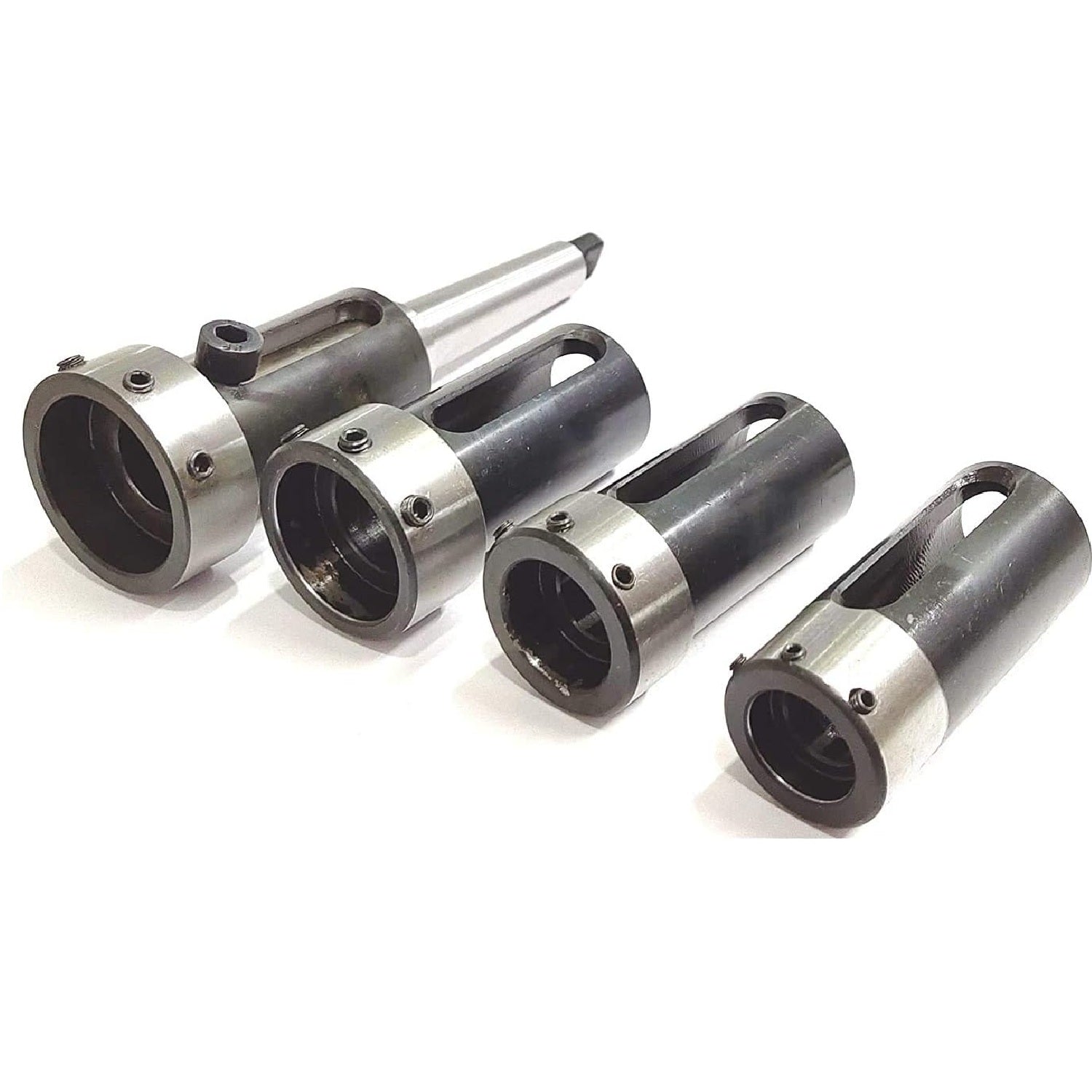
A floating die holder allows the die a small amount of self-aligning movement as it engages the workpiece, which helps absorb tiny centering errors and reduces the chance of cross-threading on the first few turns. A fixed die holder, by contrast, locks the die rigidly in position for maximum repeatability once the setup is confirmed accurate.
Floating holders are the more forgiving choice for general workshop use, since they self-correct minor tailstock or workpiece misalignment automatically. Fixed holders are preferred in production settings where the setup has already been verified, and the priority is consistent, repeatable thread quality across many identical parts.
Imperial vs Metric Die Holders
Matching your holder to the thread standard you actually cut.
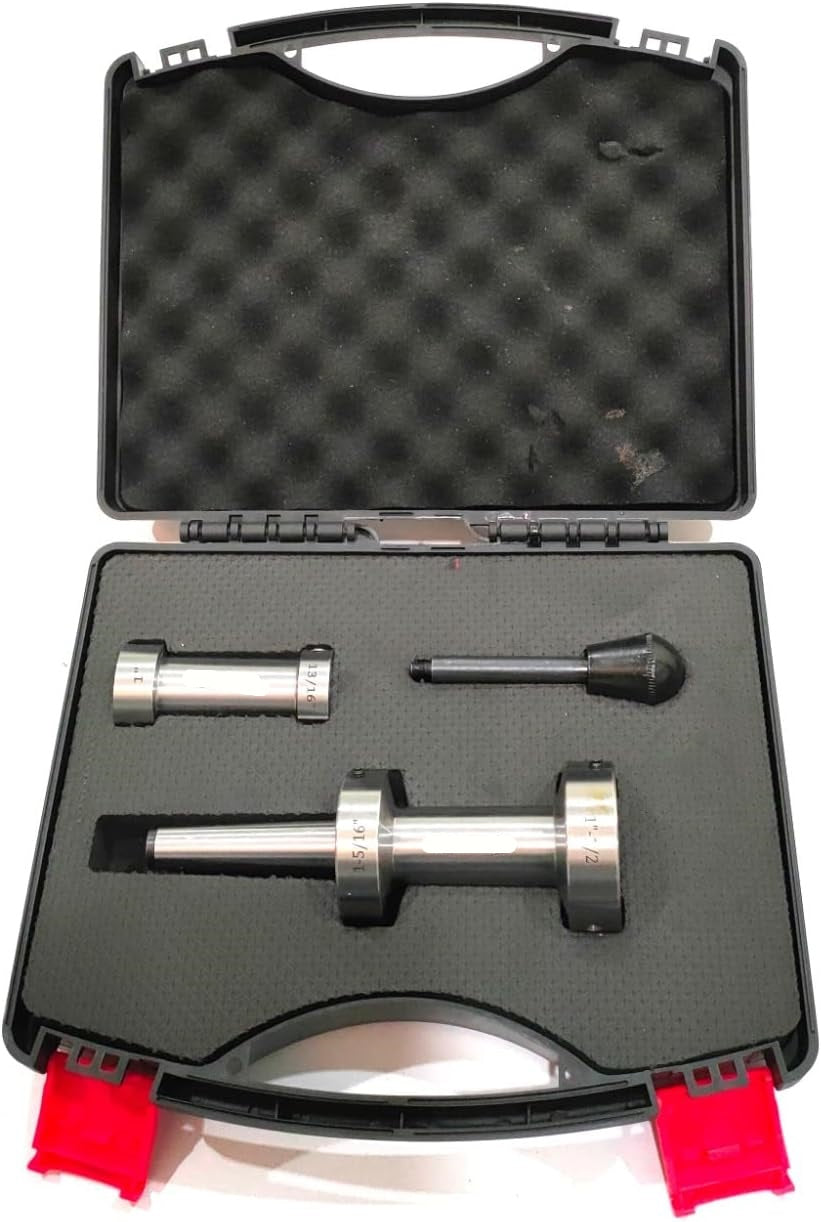
Die holders are typically built around a specific range of die sizes, and those ranges follow either imperial (inch-based, UNC/UNF) or metric (millimeter-based) standards. Using the correct holder matters because die bore diameters, retaining collars, and depth stops are all sized to the thread standard the holder is designed for.


Self-Centering Die Holders Explained
Built-in chuck jaws that grip and center the die in one motion.
A self-centering die holder uses built-in chuck jaws to grip the die and automatically center it on the tool's axis, similar to how a lathe chuck centers a workpiece. This removes the need to manually shim or adjust the die's position and speeds up changeovers between different die sizes.
These holders are especially useful in shops that switch between multiple die sizes throughout the day, since the self-centering chuck accepts a range of diameters without needing a different insert or collar for each one.
Die Holder Type Comparison
Each holder style is built for a different balance of forgiveness, rigidity, and changeover speed. Here's how they stack up.
| Feature | Floating Holder | Fixed Holder | Self-Centering Chuck |
|---|---|---|---|
| Alignment | Self-correcting | Fixed, as set | Auto-centered by jaws |
| Rigidity | Moderate | Highest | High |
| Changeover Speed | Moderate | Slower | Fastest |
| Best Use | General workshop threading | Verified production setups | Frequent die-size changes |
| Forgiveness of Setup Error | High | Low | Moderate |
Quick Recommendation: If you're threading occasionally in a general workshop, a floating holder is the most forgiving choice. If you run repeat production batches on a confirmed setup, a fixed holder gives the most consistent results, and if you switch die sizes often, a self-centering chuck saves the most time.
Best Applications for Each Die Holder Type
Matching the holder to the job improves thread quality and speed.
The right die holder depends on how often you thread, how many parts you're running, and how tight the tolerance needs to be. General repair work favors forgiving, easy-to-set-up holders, while production runs favor rigid or self-centering designs that minimize changeover time.
Floating & Fixed Holder Applications
- Threading bolt and stud blanks
- Rod ends and shaft threads
- Repair and one-off threading jobs
- Small batch production runs
- Hobbyist and home workshop threading
- Fastener manufacturing
Self-Centering Chuck Applications
- Multi-size die changeovers
- Mixed imperial and metric threading runs
- Production shops threading varied part sizes
- Toolroom and maintenance threading
- Training and educational lathe setups
- General workshop convenience
How to Choose the Right Die Holder
Ask one simple question before you pick a holder.
Start by identifying your thread standard (imperial or metric), then decide how much setup forgiveness versus rigidity your job needs. Occasional threading favors a floating holder, verified production setups favor a fixed holder, and frequent die-size changes favor a self-centering chuck.
Quick Selection Guide
| Occasional workshop threading? | Choose a Floating Holder |
| Verified repeat production run? | Choose a Fixed Holder |
| Switching die sizes often? | Choose a Self-Centering Chuck |
| Cutting UNC/UNF threads? | Choose an Imperial Holder |
| Cutting millimeter-pitch threads? | Choose a Metric Holder |
Die Holder Type Comparison
Each holder style is built for a different balance of forgiveness, rigidity, and changeover speed. Here's how they stack up.
| Feature | Floating Holder | Fixed Holder | Self-Centering Chuck |
|---|---|---|---|
| Alignment | Self-correcting | Fixed, as set | Auto-centered by jaws |
| Rigidity | Moderate | Highest | High |
| Changeover Speed | Moderate | Slower | Fastest |
| Best Use | General workshop threading | Verified production setups | Frequent die-size changes |
| Forgiveness of Setup Error | High | Low | Moderate |
Quick Recommendation: If you're threading occasionally in a general workshop, a floating holder is the most forgiving choice. If you run repeat production batches on a confirmed setup, a fixed holder gives the most consistent results, and if you switch die sizes often, a self-centering chuck saves the most time.
Professional Threading Tips
Simple techniques used by experienced machinists.
- Chamfer the workpiece end before threading to help the die start square.
- Apply cutting oil generously throughout the pass, not just at the start.
- Feed the tailstock ram slowly and let the die pull itself along.
- Back the die off periodically to break and clear chips.
- Use the correct blank diameter recommended for the thread size.
- Keep the die holder's bore clean and free of debris between jobs.
- Confirm tailstock alignment before starting a production batch.
- Inspect die teeth regularly for wear or chipped edges.
Die Holder Maintenance
Proper care keeps alignment accurate for years.
A tailstock die holder is a precision fixture, and its accuracy depends on keeping the bore, taper shank, and moving parts clean and free of chips or corrosion. Clean the holder after every use, apply a light protective oil coating to the shank and bore, and store it away from other tools to prevent impact damage. Replace or service holders that develop play in the floating mechanism, since a loose holder defeats its own purpose.
Pro Tip: Keep separate die holders sized for your most common imperial and metric die diameters. Swapping holders instead of forcing an undersized or oversized die into the wrong holder protects both the die and the holder's alignment accuracy.
Explore Our Die Holder Range
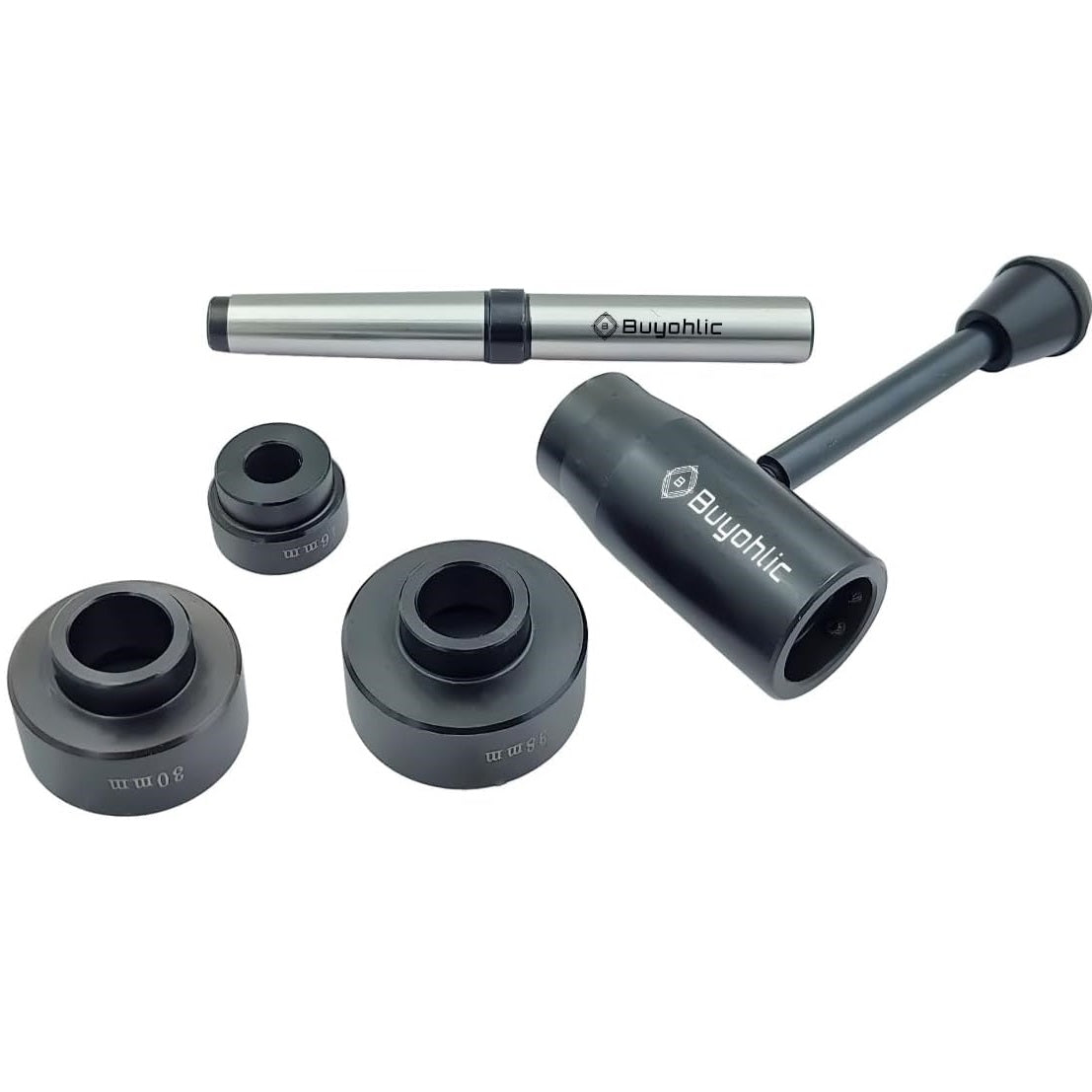
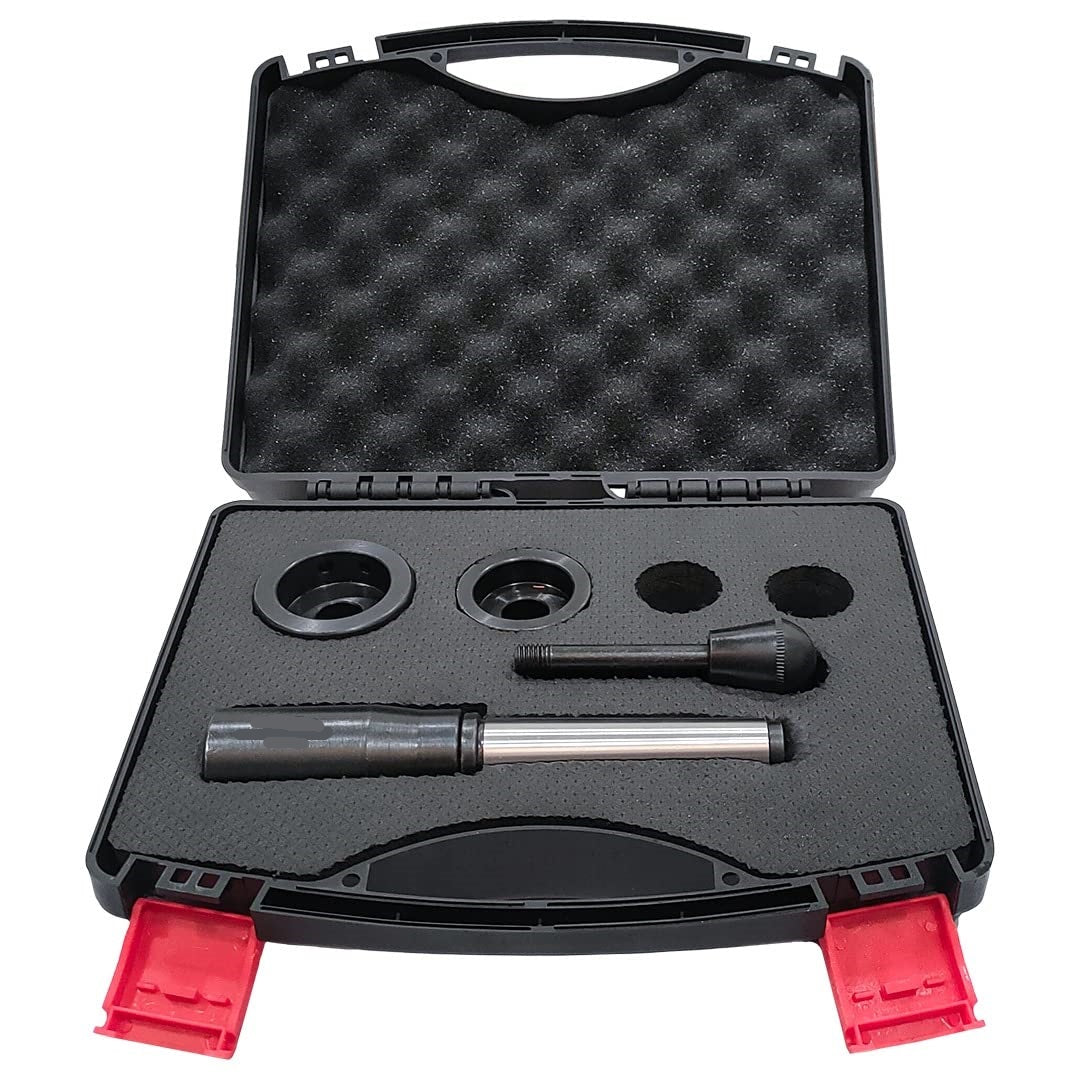
A quick look at some of the tailstock die holders in the Buyohlic catalog, covering imperial, metric, and multi-size threading needs.


Conclusion
A tailstock die holder is a small fixture that solves a very common threading problem: keeping a die square and centered without relying on hand feel alone. Floating holders forgive minor setup errors, fixed holders deliver maximum rigidity for verified production runs, and self-centering chucks speed up frequent die-size changes.
By matching the holder type to your thread standard and your workflow, and by keeping it clean and well-maintained, you can consistently cut straight, accurate threads whether you're finishing a single shaft or running a full production batch.
Related Collections
Ready to Cut Straighter, Truer Threads?
Buyohlic supplies professional-quality die holders, threading tools, lathe accessories, and workshop equipment trusted by machinists across the USA. Our products are selected for accuracy, durability, and reliable performance in both manual and CNC machining environments.
Shop Die Holders NowAbout Buyohlic
Buyohlic is your trusted source for premium industrial tools, cutting tools, and precision measuring instruments. With decades of experience serving machinists, engineers, and manufacturers, we're committed to supplying tools that professionals depend on for accuracy, durability, and reliability.
Every tool in our catalog is selected for quality and backed by our commitment to customer satisfaction. Fast shipping, expert support, and competitive pricing make Buyohlic your one-stop shop for precision turning, cutting, and measurement tools.
Frequently Asked Questions
Do I need a die holder if I can thread by hand?
What size die does a standard tailstock die holder accept?
Can one die holder cut both imperial and metric threads?
Why does my die keep binding or chattering mid-cut?
Floating or fixed: which is better for a beginner?
How often should I replace or service a die holder?


Great Value
Most popular brands with widest range of selection at best prices.

Nationwide Delivery
Over 20,000 pincodes serviceable across India.

Secure Payment
Partnered with India's most popular and secure payment solutions.

Buyer Protection
Committed to buyer interests to provide a smooth shopping experience.