

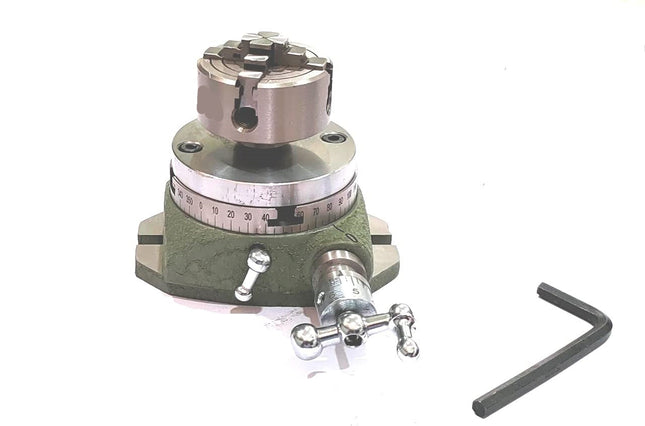




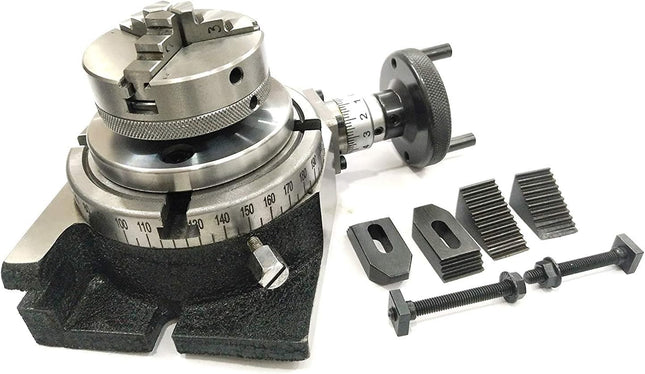
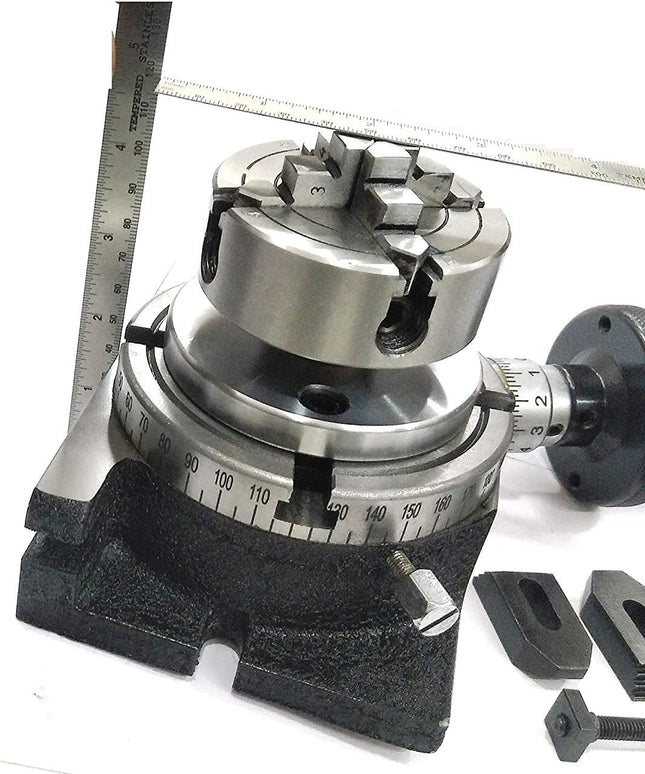


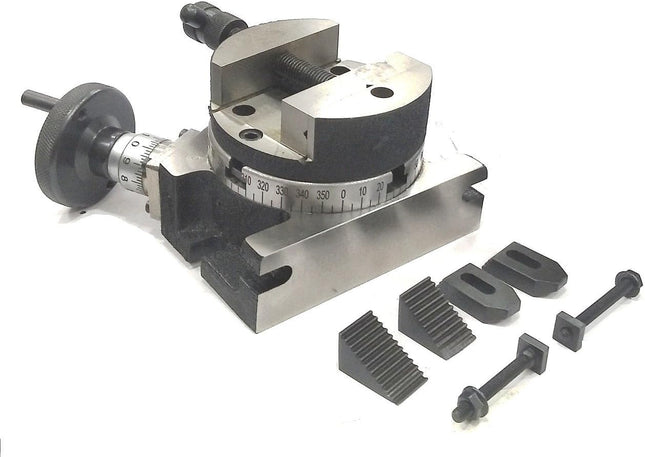
A rotary table mounted on a milling machine table gives the mill a fourth axis of motion: rotation. With a rotary table, a three-axis milling machine can produce curved slots, bolt hole circles, equally spaced holes around a diameter, gear-like profiles, and any workpiece feature that requires precise angular positioning or continuous angular motion during the cut. Without a rotary table, producing these features accurately on a vertical mill requires specialized fixtures for each geometry. With a rotary table, a single setup handles a broad range of circular and angular features.
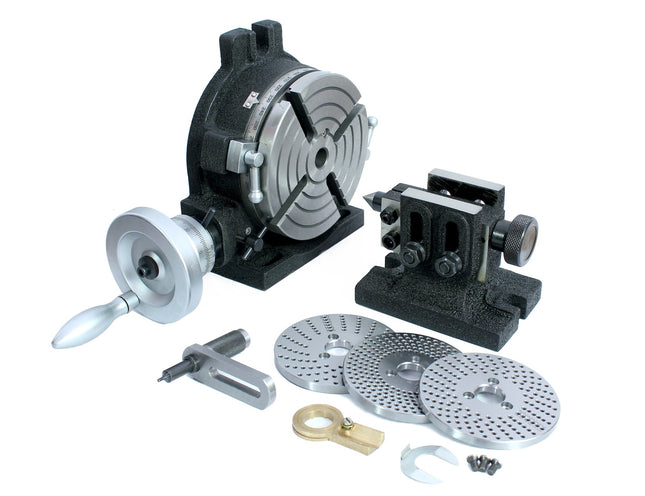
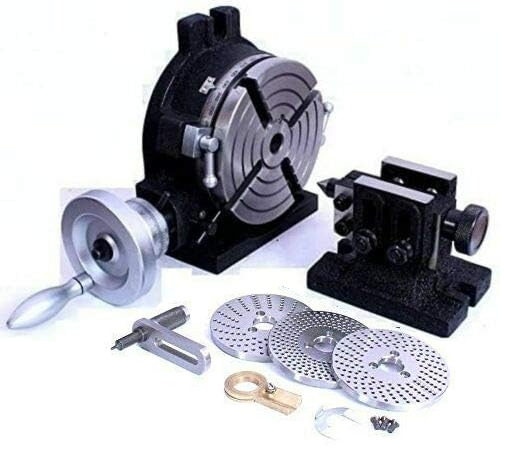
Buyohlic rotary tables are precision-ground instruments with vernier graduations for accurate angular positioning. The worm and wheel drive mechanism advances the table rotation in controlled increments, and the vernier scale reads table position to fractions of a degree. Dividing plates included with many models allow the rotary table to function as a simple indexing fixture, positioning a workpiece at precise equal angular intervals for drilling, milling, or cutting bolt hole circles and equally spaced features.
Rotary Table Applications
Bolt hole circles are the most common rotary table application in general machine shop work. When a flange, plate, or fitting requires four, five, six, or more holes equally spaced around a bolt circle diameter, the rotary table provides the precise angular indexing to position each hole accurately relative to the previous one. The table is set to zero at the first hole location, the hole is drilled, then the table is advanced by the required angular increment for each subsequent hole.
Curved slots require continuous rotation of the rotary table while the mill feeds into the slot. For an arc of 90 degrees with a specific radius, the rotary table centerline is aligned with the mill spindle, the workpiece is offset from the table center by the required radius, and the milling cutter is plunged to depth while the table is manually rotated through the required arc angle.
Gear profiles, hexagonal pockets, and multi-flat features are produced by indexing the rotary table to equal angular positions and milling each flat or tooth profile at the indexed position. This is the standard technique for producing hex recesses, spanner flats, and simple spur gear forms on a milling machine.
Choosing a Rotary Table Size
- 4 inch: Suited for benchtop mills and small machining centers, handles parts up to approximately 3 inch diameter
- 6 inch: The most versatile size for a standard knee mill, handles most everyday bolt circle and arc milling work
- 8 inch: For larger parts and heavier cuts on full-size milling machines
- 10 and 12 inch: For large industrial parts requiring precise circular machining on full-size VMC or horizontal mill
For related accessories, see our chucks for milling and turning (three-jaw chucks mount on rotary table face plates for holding round stock during circular milling). For milling tools to use with your rotary table setup, see our milling tools collection.
Frequently Asked Questions - Rotary Tables
A rotary table adds angular rotation as a fourth axis to a milling machine, allowing machining of curved slots, bolt hole circles, equally spaced holes and features, gear-like profiles, and any workpiece feature requiring precise angular positioning or continuous rotary motion during the cut. It is one of the most versatile accessories for expanding the capability of a standard three-axis vertical milling machine.
Dividing plates have rings of equally spaced holes that allow the rotary table's worm shaft to be indexed by precise angular fractions using a plunger pin that engages the holes. Each complete revolution of the worm shaft equals 1 degree of table rotation on a 360:1 worm gear ratio table. By counting the number of holes between plunger engagements, you can achieve angular positions that are fractions of a degree without reading the vernier scale, which simplifies precise equal division work such as drilling 5, 7, or 11 holes on a bolt circle.
Yes, many rotary tables can be mounted with the rotating face vertical rather than horizontal, which allows the milling machine to cut features on the side face of workpieces mounted to the table. This vertical orientation is used for producing cams, eccentric features, and side-face milling operations where the rotary axis needs to be horizontal. Check the table specification to confirm it is designed for both horizontal and vertical mounting before attempting vertical use.
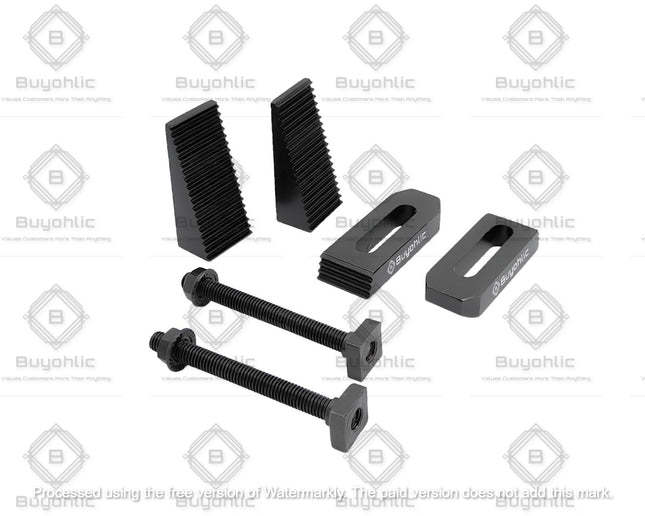
A 6-inch rotary table is the most commonly used size on a standard Bridgeport Series I knee mill. It fits comfortably on the table, provides adequate surface area for most workpieces, and gives enough clearance for the T-bolt mounting hardware. An 8-inch table is also suitable for larger work but requires careful checking of table travel and column clearance. A 4-inch table is usable on a Bridgeport for very small work but feels undersized on a full-size machine.


