






Knurling transforms a smooth metal surface into one with a textured grip pattern that human hands can hold securely. Every threaded knob on a precision instrument, every thumbscrew on a camera, every adjustment dial on a measuring tool, and every tool handle with a diamond grip pattern was produced with a knurling tool. It is one of the most visually distinctive lathe operations and one of the most practically important for any part that requires hand actuation.
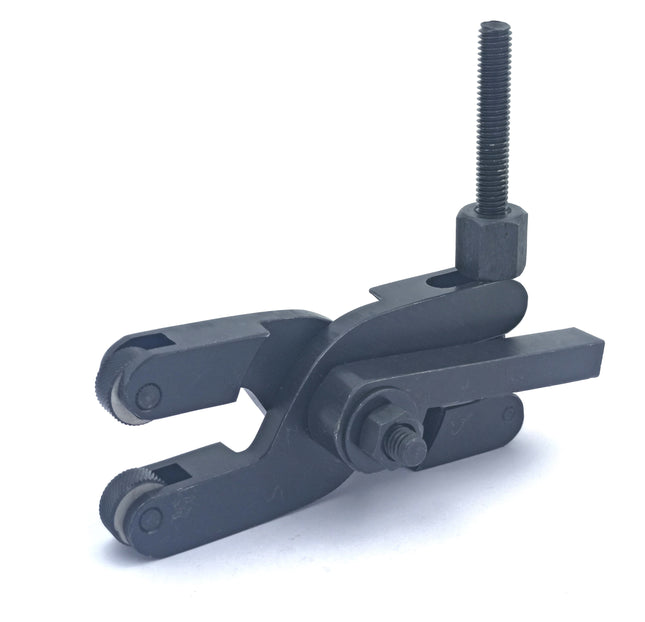
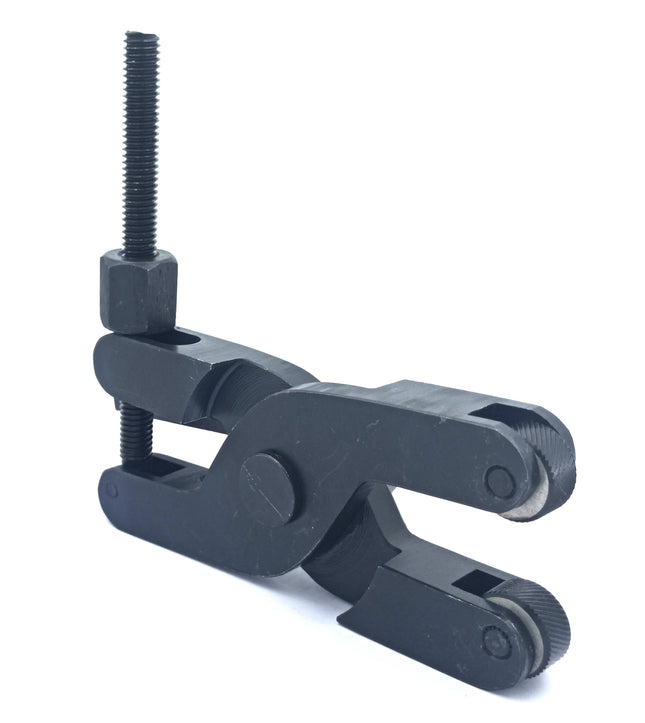
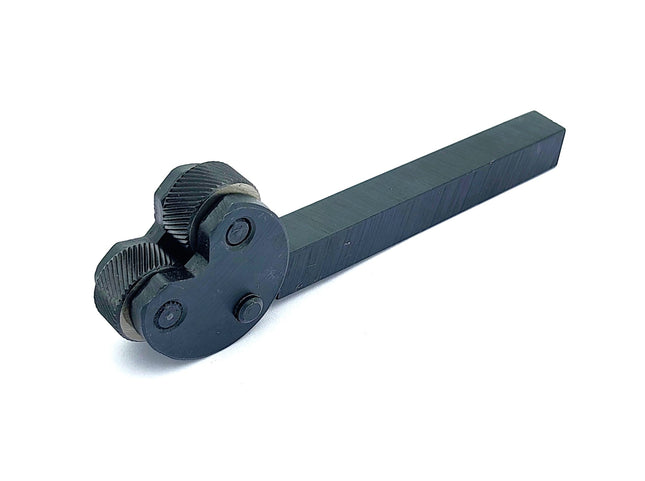
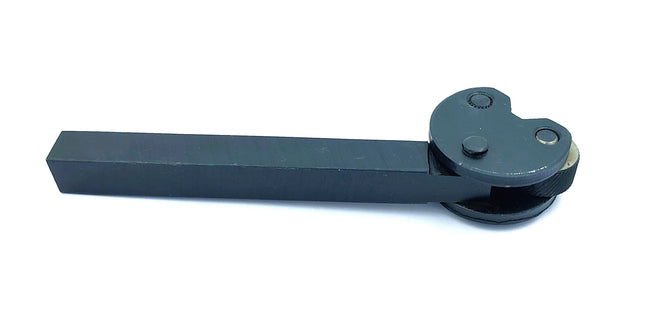
At Buyohlic, our knurling tool collection covers the full range of knurling requirements for manual and CNC lathe work in American machine shops. From classic push-type knurling tools that apply the pattern by pressing two wheels against the workpiece simultaneously, to scissor-type (straddle knurlers) that apply balanced force from both sides of the workpiece to prevent deflection, our tools deliver clean, consistent knurl patterns across the range of workpiece sizes and materials typical in US shop work.
Understanding Knurl Patterns
Straight knurling produces parallel ridges running along the length of the workpiece, parallel to the lathe axis. This pattern provides grip in the circumferential direction (resisting rotation) but slides freely in the axial direction. Straight knurling is used for parts that rotate under hand power, such as adjustment knobs and selector dials.
Diagonal knurling produces ridges at a 30 or 45-degree helix angle to the lathe axis. This gives grip in both the rotational and axial directions and is the standard choice for hand-held tool handles and parts that need to resist both pulling and rotating forces.
Diamond knurling is produced by crossing two sets of diagonal knurls to create a grid of raised diamond points. This is the most common grip pattern for precision instrument knobs, gauge adjustment rings, and any application where maximum hand grip in all directions is needed. Diamond patterns also have an aesthetic appeal that makes knurled parts look professional and finished.
Push-Type vs Scissor-Type Knurling Tools
A push-type knurling tool mounts in the tool post like a turning tool and presses the knurling wheels against the workpiece from one side. The force is applied radially, which pushes the workpiece away from the tool and into the chuck. For short, rigid workpieces this works well. For longer and thinner workpieces, the unbalanced force causes deflection that results in an uneven or double-tracking knurl pattern.
A scissor-type or straddle knurling tool clamps around the workpiece with wheels on both sides, applying equal and opposite forces that cancel each other out. The workpiece experiences no net deflection force, which produces a clean, single-track pattern even on slender workpieces. Scissor knurlers are more expensive but worth the investment for any shop that regularly knurls parts longer than twice their diameter.
Both tool types use interchangeable knurling wheel sets so you can switch between straight, diagonal, and diamond patterns by changing the wheel inserts. Stock all three wheel types to cover every pattern requirement your customers specify.
For complete lathe tooling, see our lathe tools and accessories collection and our turning tool holders.
Frequently Asked Questions - Knurling Tools
Double-tracking in a knurl pattern is caused by the wheels not tracking in the same groove on each successive revolution of the workpiece. This happens when the knurl pitch does not divide evenly into the workpiece circumference, when too little initial pressure is applied so the wheels skip and re-engage in a different position, or when workpiece deflection shifts the contact point. Start the knurl with firm initial pressure so the wheels fully engage the pattern in the first revolution. For slender workpieces, use a scissor-type straddle knurler to eliminate deflection.
Mild steel, aluminum, brass, and copper knurl easily with good results. Stainless steel and harder alloy steels require more force and slower speeds but knurl acceptably with sharp wheels. Very hard materials (hardened steel above 45 HRC) cannot be cold-rolled knurled effectively. Cast iron and brittle materials do not knurl well because the knurling process relies on plastic deformation of the surface rather than cutting.
Knurling is performed at much lower RPM than turning. A general starting point is 50 to 100 RPM for most workpiece diameters in mild steel and aluminum. Higher speeds cause the wheels to slip and generate heat rather than form the pattern cleanly. Use a slow longitudinal feed rate and apply cutting oil or way oil to the wheel contact area to reduce heat and extend wheel life.
Yes, for parts where the final knurled diameter is specified. Knurling raises material outward from the original surface by approximately half the knurl depth, so the knurled diameter will be slightly larger than the turned diameter before knurling. For precision knobs where the final diameter matters, turn the stock approximately 0.003 to 0.005 inches undersize before knurling to end up at the correct final diameter.
Coarse pitch (14 to 21 TPI) gives a more aggressive grip texture and is used for larger diameter parts where a bold knurl pattern is appropriate. Fine pitch (33 to 48 TPI) produces a tighter, more refined pattern that is standard on precision instruments and measuring tools. Medium pitch (24 to 27 TPI) is the most versatile choice covering most general work. If you stock one wheel pitch for general use, 24 or 27 TPI is the best starting point.


