


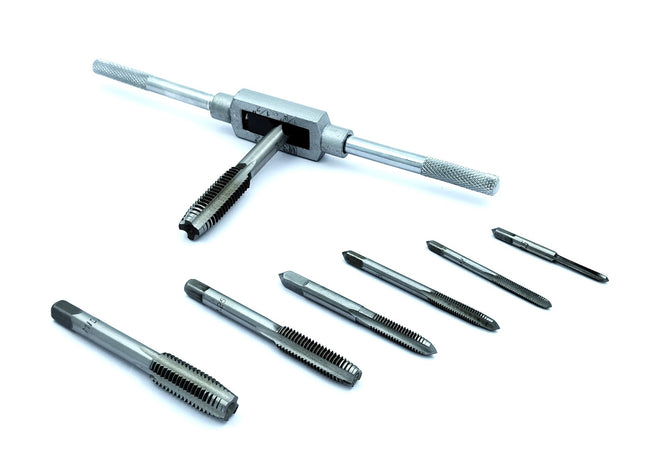
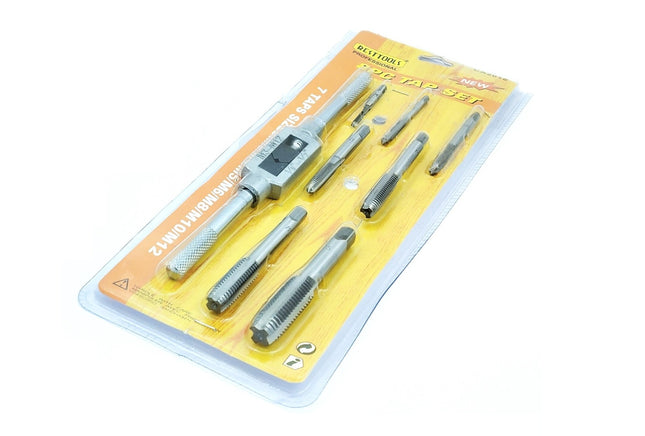


Hand tapping is one of the most common operations in any metal workshop, and the quality of your tap wrench is directly linked to your success rate. Threading a hole by hand requires slow, controlled rotation with consistent feel so you can detect when the tap is biting into the material correctly and when it is starting to bind or break. A poor-quality tap wrench that slips under torque, has imprecise jaws that grip off-center, or transmits excessive vibration through the handle makes every threading job harder and causes more broken taps.
Buyohlic tap wrenches are built for the hands-on demands of machine shop and workshop use in the United States. Whether you are threading stainless steel for a precision fitting, tapping aluminum castings in a production assembly operation, or threading wood for furniture hardware, the right tap wrench for the task makes the operation controlled, consistent, and much less likely to end with a broken tap embedded in your workpiece.
Tap Wrench Types Explained
T-handle tap wrenches are the standard choice for small to medium tap sizes up to about 5/16 inch or M8. The T-handle configuration keeps both hands on the wrench with equal leverage, making it easy to maintain consistent pressure and feel the tap cutting. The handles rotate freely in the wrench body so your fingers can maintain grip while the wrench turns. T-handle wrenches are the most common type in US tool rooms and job shops.
Straight handle tap wrenches (also called double-handle tap wrenches) have two handles extending horizontally from the central body, giving more leverage for larger tap sizes. They are used for taps from 1/4 inch to 1 inch or larger. The longer handles provide more mechanical advantage for threading hard materials and large diameter taps that require significant torque.
Ratchet tap wrenches allow the tap to be turned without lifting and repositioning the hands. A ratchet mechanism advances the tap in one direction while allowing free movement in the return stroke. This is particularly useful when tapping in a confined area where a full 360-degree handle rotation is not possible.
Spindle-type tap wrenches have a fixed body with a rotating spindle chuck that accepts the tap shank. These are used for precision tapping where consistent centerline alignment is important, such as when tapping close to a shoulder or in a precisely located hole.
Selecting the Right Tap Wrench
- For taps under M8 (5/16 inch): T-handle tap wrench with small jaw capacity
- For taps M8 to M24 (5/16 to 1 inch): Straight double-handle tap wrench with appropriate jaw range
- For work in confined spaces: Ratchet tap wrench with the correct jaw size for your tap
- For production tapping: Consider an extension tap wrench for reaching into deep bores or counterbored holes
For complete threading tooling, see our tap and die sets. For machine tapping on a lathe, see our lathe tailstock attachments, including easy tapping attachments.
Frequently Asked Questions - Tap Wrenches
Tap wrenches are sized by the range of tap shank diameters they can grip. A small T-handle tap wrench typically accepts taps from No. 0 through 1/4 inch (M1 through M6). A large straight-handle wrench handles taps from 1/4 inch through 1 inch (M6 through M25). Most workshops need both a small T-handle for fine threading work and a larger straight-handle for heavy tapping. Check the tap size you need to thread before selecting the wrench.
Turn the tap forward about half a turn to cut, then reverse a quarter turn to break the chip, then continue forward. This chip-breaking technique prevents chips from packing in the flutes and binding the tap. Use cutting oil on steel and other hard metals. Apply steady, even pressure to keep the tap straight in the hole. Use a tap guide or a drill press quill to start the tap perpendicular to the surface. Never force a tap that feels tight. Back it out fully, clear the chips, re-oil, and resume.
A T-handle tap wrench has two short handles extending perpendicular to the tap axis, giving a compact tool suitable for small taps and fine work where feel and control are primary. A straight-handle tap wrench has two longer handles giving more leverage for larger taps in harder materials. T-handle wrenches are more common for precision and fine threading; straight-handle wrenches are used for heavy threading with large taps.
Standard tap wrenches are designed specifically for holding tap shanks and are not suitable for dies, which require a die stock or die holder with a different gripping geometry. For hand cutting external threads with a die, use the correct die stock matched to your die size. Buyohlic offers die holders and tapping accessories in our threading tools collection.


