


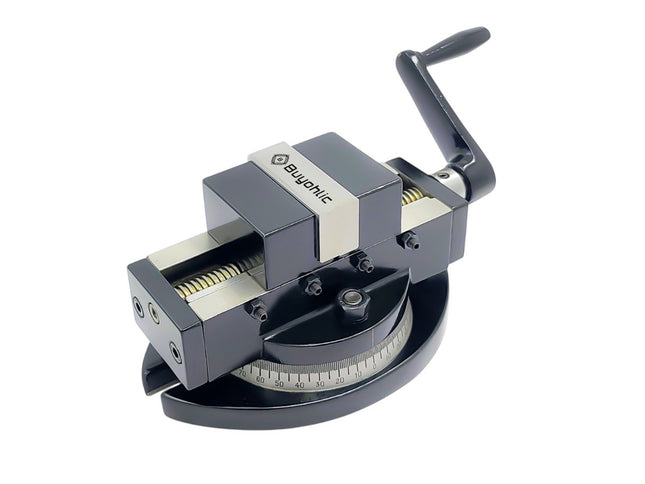
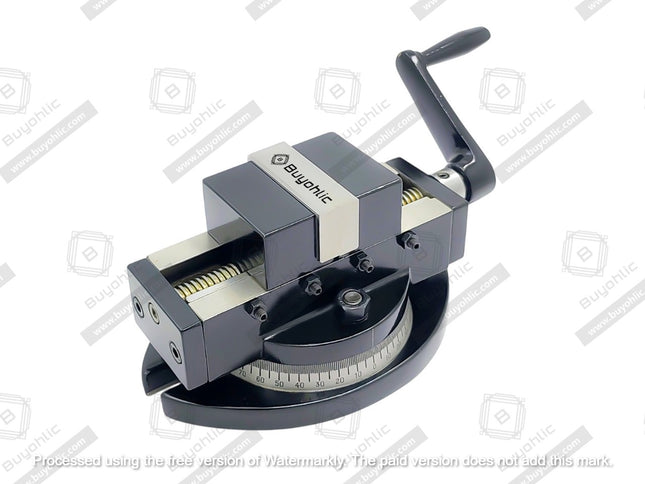
A self-centering vice is a workholding fixture that grips a workpiece from both sides simultaneously and automatically positions it on the machine's center axis as the jaws close. This makes it one of the most efficient workholding solutions available for CNC milling, manual milling, and inspection work where repeat accuracy matters more than raw clamping force alone. Buyohlic stocks self-centering vices built for machinists across the USA who need fast, repeatable part positioning without manually indicating each workpiece.
How a Self-Centering Vice Works
Unlike a standard vice, where only one jaw moves toward a fixed jaw, a self-centering vice moves both jaws inward at the same rate. This means the centerline of the workpiece stays fixed relative to the vice body regardless of the part's width, which eliminates the need to re-zero the machine's coordinate system every time a differently sized part is loaded.
This self-centering behavior is achieved through a synchronized screw mechanism or a scissor-style linkage, depending on the design. Either way, the practical benefit is the same: once the vice itself is indicated to the machine table, every part clamped in it lands on the same known center point.
Common Applications
- CNC milling operations requiring repeatable part centering
- Production runs where multiple identical parts are machined in sequence
- Inspection and gauging setups where centerline accuracy is critical
- Symmetrical machining operations, such as slotting or centered drilling
- Fixture plates in multi-part CNC setups
Choosing the Right Self-Centering Vice
Match the jaw width and opening capacity to the range of part sizes you typically machine, and confirm the vice's clamping force is adequate for your material and cutting parameters. For CNC production work, a vice with hardened and ground jaw faces will hold tolerance longer under repeated use than a standard machined finish. If your shop also runs a rotary table setup, a self-centering vice pairs naturally with rotary work for parts that need both centered clamping and indexed rotation.
Installation and Setup Tips
When mounting a self-centering vice for the first time, always indicate the fixed reference surface of the vice body against the machine table before relying on its centering accuracy for production work. Periodically check the synchronization of both jaws, since wear over the years of heavy use can introduce a small offset that is easy to overlook until a batch of parts comes out slightly off-center. Keeping the screw mechanism or linkage lightly lubricated and free of chips will preserve accuracy and extend the working life of the vice considerably.


