




High-speed steel (HSS) is the original modern cutting tool material, and despite the widespread adoption of carbide and ceramic inserts in production machining, HSS remains an essential tool material for a large proportion of machine shop work in the United States. HSS tools are tougher than carbide (they tolerate interrupted cuts and setup errors that would chip a carbide insert), can be ground to custom geometries on a bench grinder, are economical for low-volume work where insert replacement cost is significant, and are the only practical choice for form tools, special profile cutters, and threading tools where the exact cutting geometry must be custom ground for the specific application.
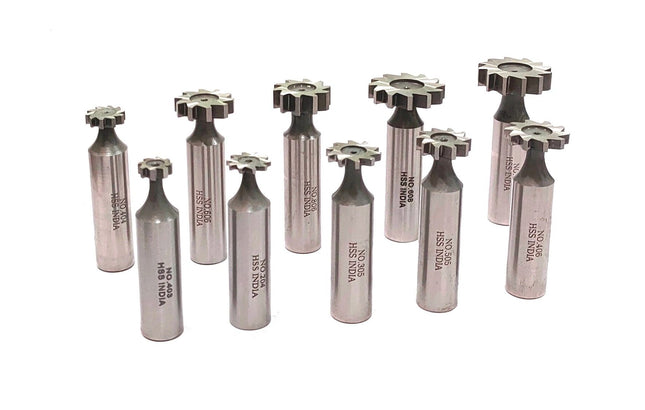
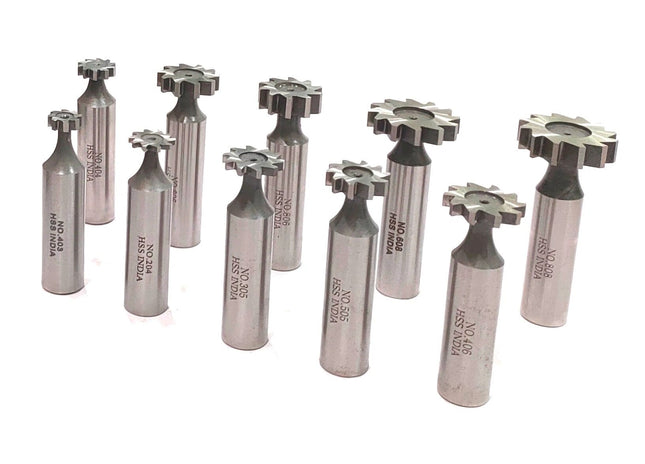
Buyohlic's HSS cutting and finishing tools collection covers the full range of high-speed steel tooling used in American machine shops. Ground tool bits for lathe turning in standard square and rectangular sections. HSS cutting blades for parting, slitting, and form work. Drill bits and reamers in HSS for general drilling and hole finishing. Tap and die sets in HSS for cutting internal and external threads in all common sizes used in US manufacturing.
Where HSS Outperforms Carbide
Interrupted cuts on a lathe or mill create impact loads on the cutting edge as the tool enters and exits the cut. Castings with sand inclusions, parts with keyways, and any workpiece that is not a complete cylinder present interrupted cut conditions. Carbide's hardness makes it brittle under impact, and interrupted cuts chip carbide edges quickly. HSS is significantly tougher and tolerates interrupted cuts much better, making it the preferred choice for turning castings, milling parts with slots or holes, and any operation where the cutting edge hits and leaves the work surface multiple times per revolution.
Custom geometry tools for special applications can only be practically made in HSS. A form tool for producing a specific profile on a turned part is ground to shape on a bench grinder from a standard HSS blank. This is not economical in carbide, which requires precision grinding equipment. Threading tools for non-standard thread forms and pitches, special profile cutters for woodworking and metalworking jigs, and tools for scraping and finishing soft metals are all more practically made and resharpened in HSS than in any other cutting tool material.
- HSS tool bits in standard square sections for lathe turning
- HSS parting and grooving blades
- HSS drill bits in fractional, number, and metric sizes
- HSS end mills for general milling where carbide is not required
- HSS reamers for hand and machine reaming
For carbide tooling when higher speeds are required, see our carbide inserts. For reamers in HSS, see our reamers collection.
Frequently Asked Questions - HSS Tools
HSS (high-speed steel) is tougher and more impact-resistant. It tolerates interrupted cuts, machine vibration, and setup errors that would chip carbide. It can be reground by hand to custom geometries. Carbide is much harder and heat-resistant, allowing cutting speeds two to four times faster than HSS on the same material. Carbide lasts longer between changes at high speeds but is brittle and chips under impact. For production CNC machining at high speeds: carbide. For manual machines, interrupted cuts, and custom form tools: HSS.
Yes, and the ability to regrind is one of HSS's main advantages over carbide inserts. A dull or chipped HSS tool bit can be reground on a bench grinder with an aluminum oxide wheel to restore the cutting edge and geometry. The rake angles, clearance angles, and nose radius can all be customized during grinding to suit specific materials and operations. This makes HSS tools economical for low-volume work and unique applications where insert tooling is not cost-effective.
HSS stands for High-Speed Steel. It is an advanced alloy steel formulated by adding elements like tungsten, chromium, vanadium, and molybdenum to carbon steel. This chemical composition makes the tool highly durable and remarkably heat-resistant compared to traditional high-carbon steels.
Carbide (specifically Tungsten Carbide) is significantly harder than HSS.
- Speed and Red Hardness: Carbide possesses excellent "red hardness" the ability to maintain a sharp cutting edge even at extreme temperatures. Because of this, carbide tools can be run at cutting speeds 3 to 4 times faster than HSS.
- Toughness vs. Brittleness: The trade-off for carbide's extreme hardness is its brittleness; it is prone to chipping or snapping if subjected to sudden shocks, vibrations, or unstable setups. HSS, on the other hand, is much tougher and more flexible, meaning it can absorb impacts and withstand structural flexing without breaking.
HSS cutting refers to the machining process (turning, milling, drilling, or parting) of materials like metal, wood, or plastics using tools made from High-Speed Steel.
Before HSS was invented, older carbon steel tools would overheat at high speeds, lose their tempering (hardness), and dull instantly. HSS revolutionized manufacturing because it retains its hardness at elevated temperatures (up to roughly 600°C). This allows machinery to run at higher velocities for prolonged periods without thermal breakdown of the tool edge. It is widely used in lathe operations, workshop milling, and shaping.
When you see HSS stamped on a drill bit, it indicates that the bit is manufactured from High-Speed Steel.
- Applications: These bits are highly versatile and ideal for drilling through mild steel, iron, aluminum, brass, plastics, and hardwoods.
- The Practical Advantage: For manual handheld drilling or standard workshop applications, HSS drill bits are generally the safest and most reliable choice. Unlike rigid carbide bits, an HSS bit will slightly flex rather than instantly shatter if you accidentally tilt the drill or bind it in a hole.


